
Why Does My Costa Rica Home Feel Damp? Understanding Tropical Humidity
Jules · 9/13/2026
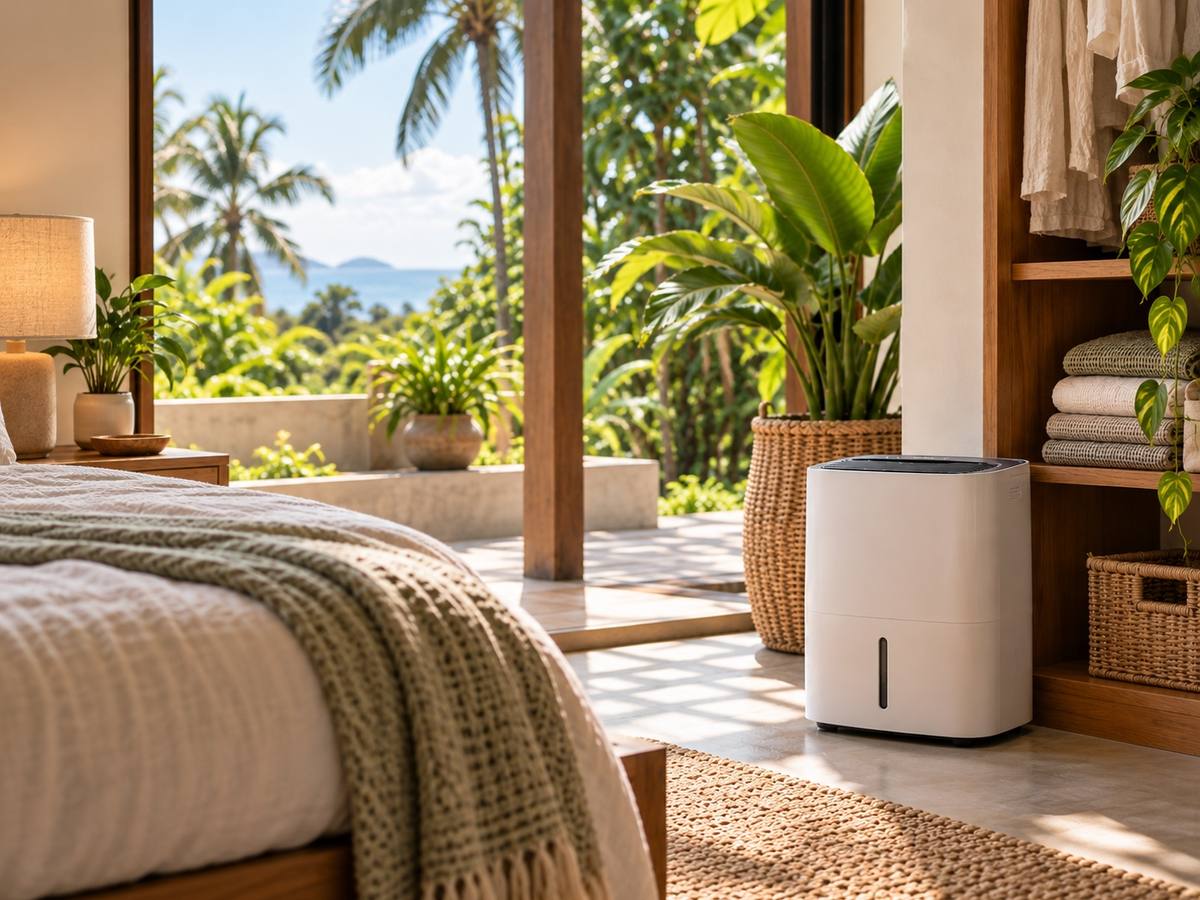
Living in Costa Rica comes with warm weather, lush greenery and an incredible connection to the outdoors. It also comes with something almost every homeowner eventually learns to manage: humidity.
You may notice that your sheets feel slightly damp, a closet develops a musty smell, towels take longer to dry, or something stored away for a few weeks suddenly has spots of mold. Even a home that is clean, air-conditioned and well maintained can experience moisture problems in a tropical climate.
The good news is that humidity itself isn't unusual or necessarily a sign that something is wrong with your home. It simply needs to be understood and managed.
Why Costa Rica Homes Can Feel So Damp
Humidity refers to the amount of moisture in the air. Relative humidity tells us how much moisture the air is holding compared with the maximum amount it could hold at that temperature.
In Costa Rica's tropical climate—particularly during rainy season and in lush coastal areas—the surrounding air can contain a significant amount of moisture.
That moisture doesn't stay outside.
Every time doors and windows are opened, humid outdoor air enters the home. Moisture also comes from showers, cooking, wet clothing and towels, people, and everyday indoor living.
Homes surrounded by dense vegetation or receiving limited direct sunlight may take longer to dry out as well.
This is why managing humidity here is less about eliminating moisture completely and more about preventing it from remaining trapped in the home.
What Humidity Level Should You Aim For?
For most homes, keeping indoor relative humidity below about 60% is a useful goal for reducing conditions that encourage mold growth.
You don't need to guess.
A small digital humidity meter, often called a hygrometer, can tell you both the temperature and relative humidity of a room. They are inexpensive, easy to use and particularly helpful in bedrooms, closets, storage areas and rooms that aren't occupied every day.
Smart Wi-Fi humidity sensors can take this a step further by allowing you to monitor conditions remotely and receive alerts when humidity rises above a chosen level.
For homeowners who spend part of the year outside Costa Rica, this can be especially useful.
Air Conditioning Helps—but It Isn't Always Enough
Air conditioners cool the air and also remove some moisture while they operate.
But simply setting an AC to a low temperature isn't necessarily the best humidity strategy.
An oversized unit may cool a room quickly and switch off before it has run long enough to remove much moisture. Rooms can therefore feel cool while still remaining humid.
AC also only helps the areas where it is operating. A cool bedroom doesn't necessarily protect a closed closet, bathroom, storage room or another part of the house.
This is one reason measuring humidity can be more useful than relying on temperature alone.
When a Dehumidifier Makes Sense
A dehumidifier is designed specifically to remove moisture from the air.
For persistently damp rooms, enclosed spaces or homes that remain closed for periods of time, a dehumidifier can make a noticeable difference.
They can be particularly useful in:
- Bedrooms
- Closets and dressing rooms
- Storage areas
- Laundry areas
- Rooms with limited airflow
- Homes closed for extended periods
- Spaces where air conditioning isn't regularly used
Remember that a dehumidifier collects water. Depending on the model, the reservoir will need to be emptied or the unit can be connected to continuous drainage.
Opening the Windows Isn't Always the Answer
Opening your home and letting the breeze through can be wonderful in Costa Rica—and good airflow can absolutely help prevent stagnant pockets of moisture.
But airflow and humidity aren't the same thing.
If the outdoor air is extremely humid, opening every window can also bring more moisture into the house.
The best approach changes with the weather.
On dry, sunny days, opening the house can encourage ventilation and help fabrics and surfaces dry. During periods of heavy rain and very high outdoor humidity, controlled indoor conditions may be more effective.
The goal is not simply to keep a house open or closed. It is to understand what the conditions actually are.
The Rooms You Aren't Using May Need the Most Attention
One of the easiest places for moisture problems to develop is somewhere you aren't looking.
A guest bedroom that stays closed for several weeks.
An owner's closet.
A cabinet full of linens.
A suitcase stored after a trip.
A storage room that rarely gets opened.
Without regular airflow, moisture can remain trapped around fabrics and belongings. By the time there is a noticeable smell, the conditions may have existed for quite some time.
Open closets and cabinets periodically. Allow air to circulate. Avoid packing linens or clothing tightly together, and never store anything while it is even slightly damp.
Pay Attention to Fabrics and Soft Furnishings
Mattresses, pillows, upholstered furniture, rugs, curtains, clothing and linens can all absorb moisture from humid air.
Breathable materials are particularly valuable in tropical homes.
Cotton bedding and lightweight natural fabrics tend to feel more comfortable in warm climates and can generally be washed and dried easily.
Also consider what is underneath your mattress. Air needs to circulate there too. A mattress sitting directly against a solid surface in a humid environment can trap moisture underneath.
Regularly check areas that aren't immediately visible.
Don't Forget Closets and Cabinets
Closed cabinetry creates small environments of its own.
Even when the main room feels comfortable, the inside of a tightly closed wardrobe or kitchen cabinet may have very little airflow.
Leave some breathing room between stored items, periodically open doors and drawers, and check areas against exterior walls.
Small moisture absorbers can be useful in certain enclosed spaces, but they aren't a substitute for managing high humidity throughout an entire room.
Pay Attention to Unfinished and Porous Surfaces
Some materials are especially good at absorbing and holding moisture—and they can develop mold before you notice anything happening.
Unfinished or unsealed wood is one of the biggest areas to watch in a tropical home. The underside of a wooden bed frame, the back or bottom of furniture, unfinished shelving, plywood, particle board and MDF can all absorb moisture from humid air.
Cardboard is another common problem. Moving boxes and cardboard storage containers can hold moisture and become an ideal place for mold to develop, particularly when stored in closets, bodegas or against walls.
Also check the places you don't normally see.
The back of framed artwork and photographs can trap moisture between the frame and the wall. The same can happen behind mirrors, headboards and furniture positioned tightly against a wall—especially an exterior wall.
Periodically inspect:
- The underside of wooden beds and furniture
- Unfinished or unsealed wood
- Particle board, MDF and plywood
- Cardboard boxes and cardboard storage
- The backs of framed photographs and artwork
- Behind mirrors and headboards
- Behind furniture placed against walls
- Shelving and cabinetry against exterior walls
Where possible, avoid storing important belongings long-term in cardboard. Use storage materials that are better suited to humid conditions, and leave a little space between large furniture or artwork and walls where practical so air can circulate.
In Costa Rica, some of the first signs of excess moisture aren't necessarily in the middle of the room—they're often on the unfinished back, underside or hidden surface of something you haven't moved in months.
Watch for the Early Signs
Humidity problems are much easier to manage before they become significant.
Pay attention to:
- A persistent musty smell
- Condensation on windows or surfaces
- Bedding or clothing that feels damp
- Towels that don't fully dry
- Small mold spots on fabrics, leather or walls
- Mold or discoloration underneath or behind furniture
- Swelling or changes in wood furniture or cabinetry
- Rust or corrosion developing unusually quickly
- Humidity readings that remain consistently high
A musty smell is worth investigating rather than simply covering it with fragrance.
You Can't Manage What You Aren't Measuring
One of the simplest changes you can make in a tropical home is to start measuring humidity.
Place a humidity monitor in the areas you're most concerned about and observe the readings over several days.
You may discover that the bedroom is perfectly comfortable while the closet is consistently humid. Or that humidity climbs dramatically overnight or during several consecutive rainy days.
Once you understand what is happening in your particular home, you can decide whether the solution is better airflow, more regular AC use, a dehumidifier, improved storage—or simply changing a few everyday habits.
A Simple Tropical Home Humidity Checklist
- Keep a digital humidity meter in problem areas
- Aim to keep prolonged indoor humidity below approximately 60%
- Allow air to circulate around furniture, mattresses and stored belongings
- Open closets and cabinets regularly
- Never store damp towels, clothing or linens
- Avoid long-term storage of important belongings in cardboard
- Check unfinished wood, particle board, MDF and other porous surfaces
- Periodically check underneath furniture and behind artwork, mirrors and headboards for hidden moisture or mold
- Check guest rooms and other rarely used spaces
- Use air conditioning strategically
- Consider a dehumidifier for persistently damp areas
- Pay attention to musty smells rather than masking them
- Monitor your home more closely during rainy season
- Consider Wi-Fi humidity monitoring if your home is frequently unoccupied
Living Well With the Climate
A tropical home doesn't need to feel sealed off from the environment around it. Part of the beauty of living in Costa Rica is opening the doors, feeling the breeze and living closer to nature.
The goal isn't to create a perfectly controlled indoor environment.
It's to understand the climate well enough to work with it.
A little airflow, thoughtful storage, breathable materials, regular checks of the places we don't normally see, and simple humidity monitoring can go a long way toward keeping your home—and the things inside it—comfortable and well cared for.
At Esencia Living, we're continually looking for practical products that make everyday life in Costa Rica simpler, healthier and more comfortable. Visit us in Uvita to discover thoughtfully selected essentials for tropical living.