
Mold in Costa Rica: How to Prevent It Before It Starts
Jules · 10/5/2026
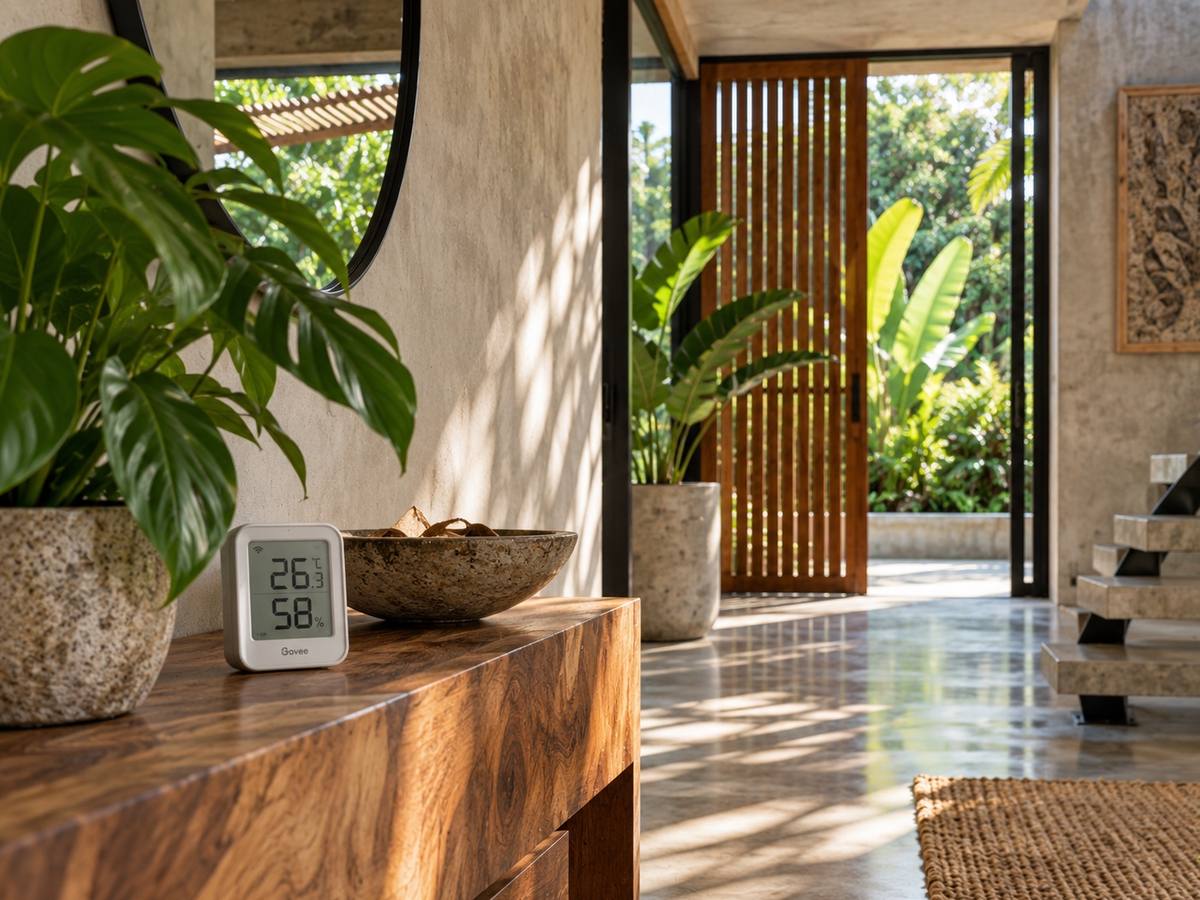
Living in Costa Rica means living in a warm, humid environment—and moisture is simply part of the climate.
That doesn’t mean mold has to be part of your home.
One of the biggest lessons of tropical living is that mold prevention is much easier than mold removal. Once you can see or smell mold, moisture has often been present for some time.
The better approach is to understand where moisture tends to collect, monitor the conditions inside your home, and create simple routines that make it harder for mold to take hold in the first place.
If you haven’t already read our guide Why Does My Costa Rica Home Feel Damp? Understanding Tropical Humidity, start there. Understanding humidity is the first step. This guide is about what to do with that information.
Mold Needs the Right Conditions
Mold spores naturally exist in our environment. The goal isn’t to create a completely mold-free world—it is to prevent your home from providing the damp conditions that allow mold to grow.
In Costa Rica, those conditions can develop surprisingly quickly.
Rainy weather, high outdoor humidity, closed rooms, limited airflow, damp fabrics, leaks, condensation and porous materials can all contribute.
And mold doesn’t necessarily begin somewhere obvious.
Sometimes the first place you find it is underneath a bed, behind a photograph, inside a closet, or on something stored in a cardboard box.
Start by Measuring Humidity
One of the simplest things you can do is stop guessing.
A room can feel perfectly comfortable while its humidity remains high. Temperature alone doesn’t tell you how much moisture is in the air.
A small humidity monitor, or hygrometer, allows you to see the relative humidity in a particular space.
As a general home-management goal, keeping indoor relative humidity below about 60% where practical helps reduce conditions that encourage mold growth.
More important than obsessing over a single reading is watching what happens over time.
Does the humidity rise significantly overnight?
Does your closet stay more humid than your bedroom?
What happens after several days of rain?
Does the humidity decrease when the AC or dehumidifier runs?
Those patterns tell you much more about your home.
Making Humidity Monitoring Easier
This is where smart humidity monitoring becomes particularly useful.
At Esencia Living, we are bringing in Govee humidity monitors as a simple way to better understand what’s happening inside your home.
Depending on the model, smart monitoring can allow you to track temperature and humidity readings and view historical changes from your phone rather than relying on a single reading at the moment you happen to check.
This can be especially helpful for:
- Vacation homes
- Rental properties
- Owner closets
- Storage rooms
- Guest bedrooms
- Homes left vacant for periods of time
- Rooms with previous moisture problems
Shop Govee Humidity Monitors →
Check the Places You Don’t Normally See
A beautiful, clean room can still have mold developing somewhere hidden.
In tropical homes, make a habit of occasionally looking under, behind and inside.
Check underneath beds and mattresses. Move bedside tables and dressers. Look behind headboards. Open cabinets. Inspect the backs of artwork and mirrors.
Pay particular attention to furniture positioned tightly against exterior walls.
A little space between furniture and the wall can help air circulate and also makes it easier to see what’s happening behind it.
Unfinished Wood Can Be a Problem
One of the most overlooked areas in tropical homes is unfinished or unsealed wood.
The visible part of a piece of furniture may be beautifully finished while the underside or back is completely raw.
Look underneath wooden bed frames.
Check the backs and bottoms of dressers and nightstands.
Inspect unfinished shelving.
Particle board, MDF and plywood also deserve attention, particularly where edges, backs or undersides are exposed. These porous materials can absorb moisture from humid air, and because they’re normally hidden, mold can develop there long before anyone notices.
If you’re buying furniture for a tropical home, don’t just look at the surface you can see.
Look underneath and behind it too.
Be Careful With Cardboard
Cardboard and tropical humidity are not great long-term companions.
Moving boxes often get packed into a bodega, owner’s closet or spare room and forgotten.
Cardboard is porous, absorbs moisture and can become musty or moldy in humid conditions.
For long-term storage, consider replacing cardboard with storage containers better suited to the climate—especially for linens, documents, clothing or belongings you care about.
Avoid placing cardboard boxes directly against walls or floors where moisture may collect.
Artwork, Photographs and Mirrors Need Checking Too
Artwork is another surprisingly common hiding place.
The front can look completely normal while moisture is trapped between the back of the frame and the wall.
Periodically remove framed artwork and photographs and inspect both the wall and the back of the frame.
Pay particular attention to pieces mounted on exterior walls or in rooms that receive limited airflow.
The same applies to mirrors and decorative wall pieces.
Give Your Mattress Some Air
Mattresses absorb moisture from the people sleeping on them as well as from the surrounding air.
In a humid climate, airflow around the mattress matters.
Avoid placing a mattress directly on a solid surface without adequate ventilation underneath. Periodically check underneath mattresses and inspect the bed frame at the same time.
If a guest room isn’t being used regularly, don’t assume the mattress is safer because nobody is sleeping there.
A closed, stagnant room can sometimes need more attention, not less.
Don’t Put Damp Things Away
This sounds obvious, but in Costa Rica something can feel almost dry without actually being completely dry.
Towels, bathing suits, cleaning cloths, bedding and clothing should be thoroughly dry before they’re folded and stored.
Avoid leaving damp towels hanging in closed bathrooms or laundry sitting in the washing machine.
Be careful about making a bed with linens that haven’t completely dried. Moisture trapped between layers of fabric is exactly what you’re trying to avoid.
Open Closets and Cabinets
Closets can become little humidity chambers.
Even if the bedroom has good airflow, the air inside a closed wardrobe may barely move.
Don’t pack clothing and linens so tightly that air can’t circulate.
Open closets and cabinets regularly. Check corners and surfaces against exterior walls, and occasionally remove stored items so you can see what is happening behind them.
Small moisture absorbers can be useful in enclosed areas, but they aren’t a replacement for dealing with consistently high room humidity.
Use Air Conditioning Strategically
Air conditioning can help remove moisture while it runs, but colder isn’t necessarily better.
The goal isn’t simply to make the room cold. You want the system to operate effectively enough to remove moisture from the air.
And remember: air conditioning in one bedroom doesn’t necessarily help the closed closet beside it or the storage room down the hall.
This is another reason individual humidity monitors can be useful.
Know When You Need a Dehumidifier
If a room remains persistently humid despite reasonable airflow and AC use, a dehumidifier may be a better solution.
Unlike an air conditioner, its primary purpose is to remove moisture from the air.
Dehumidifiers can be especially helpful in:
- Enclosed rooms
- Storage areas
- Bedrooms
- Closets and dressing rooms
- Rooms with limited airflow
- Homes that remain closed for extended periods
If you’re using one regularly, continuous drainage can be particularly convenient where the setup allows it.
Don’t Ignore Small Leaks
Not every moisture problem is caused by tropical humidity.
A leaking roof, plumbing leak, poorly sealed window, condensation problem or drainage issue can create localized moisture that no amount of general humidity management will solve.
After heavy rain, look around the house.
Check ceilings and walls for discoloration. Look around windows and doors. Inspect under sinks. Pay attention to cabinetry near plumbing.
A small water problem is usually much easier to address before it becomes a large one.
Your Air Conditioners Need Maintenance Too
Air-conditioning systems themselves need regular cleaning and maintenance.
Filters, coils, drain lines and other components can accumulate dust and moisture. A system that isn’t operating or draining correctly may also be less effective at controlling indoor conditions.
Follow the manufacturer’s recommended maintenance schedule and have systems professionally serviced as appropriate for their use and environment.
If an AC smells musty when it starts running, don’t simply cover the smell with fragrance.
Find out why.
Be Extra Vigilant During Rainy Season
A routine that works beautifully during several sunny weeks may not be enough after days of continuous rain.
That’s why tropical home care needs to adapt to the season.
During particularly wet periods:
- Check humidity readings more frequently
- Run dehumidifiers where needed
- Monitor closed bedrooms and storage rooms
- Open and inspect closets
- Make sure laundry and linens are completely dry
- Look behind and underneath furniture periodically
- Check unfinished wood and porous materials
- Check for leaks after heavy rainfall
- Pay attention to new musty smells
Small preventative habits can save a great deal of work later.
Leaving Your Costa Rica Home? Don’t Simply Lock the Door
Homes left vacant deserve their own plan.
Before leaving for an extended period, make sure everything inside is completely dry. Remove damp towels and laundry. Don’t leave wet cleaning cloths under sinks. Check the refrigerator and pantry. Inspect closets and storage areas.
Think about how humidity will be managed while nobody is there.
Depending on the home, that might involve scheduled AC operation, dehumidification, ventilation, humidity monitoring, or someone periodically checking the property.
A smart humidity monitor can be especially valuable here because it gives you information when you aren’t physically standing inside the house.
Create a Simple Tropical Home Routine
Mold prevention doesn’t need to become another complicated household job.
A few recurring habits can make a significant difference.
Weekly
Keep wet laundry and towels under control. Notice musty smells. Check rooms that remain closed and look at humidity readings in areas you’re monitoring.
Monthly
Look underneath mattresses and beds. Check behind selected furniture and artwork. Open and inspect less-used cabinets and closets. Look at unfinished wood, particle board, MDF and other porous surfaces.
During Rainy Season
Increase how often you check humidity, closed spaces and potential problem areas.
Before Leaving the Property
Make sure fabrics are dry, remove anything damp, check for leaks, establish how humidity will be managed, and make sure someone can respond if a problem develops.
Prevention Is Easier Than Remediation
One of the biggest mistakes we can make in a tropical home is waiting until mold becomes visible before thinking about moisture.
You don’t need to be afraid of humidity.
You simply need to understand it.
Measure what’s happening. Pay attention to the hidden places. Keep air moving where appropriate. Control excess moisture when necessary. Choose storage and materials thoughtfully. And create a routine that works with the climate rather than against it.
Costa Rica’s environment is one of the reasons so many of us love living here.
Learning how to care for a home in that environment is simply part of tropical living.
At Esencia Living, we look for practical products that solve the everyday realities of living in Costa Rica—not just products that look good on a shelf.
Our Govee humidity monitoring collection will be available online and in our Uvita store, making it easier to understand and manage the conditions inside your home.
Shop Humidity Monitoring →